
Hybrid solar power systems combine the advantages of grid-connected and off-grid systems. They function as a grid-tied (on-grid) system, allowing you to feed excess solar energy back into the utility grid while maintaining maximum efficiency. Electricity generation in photovoltaic systems is directly dependent on the level of solar radiation.
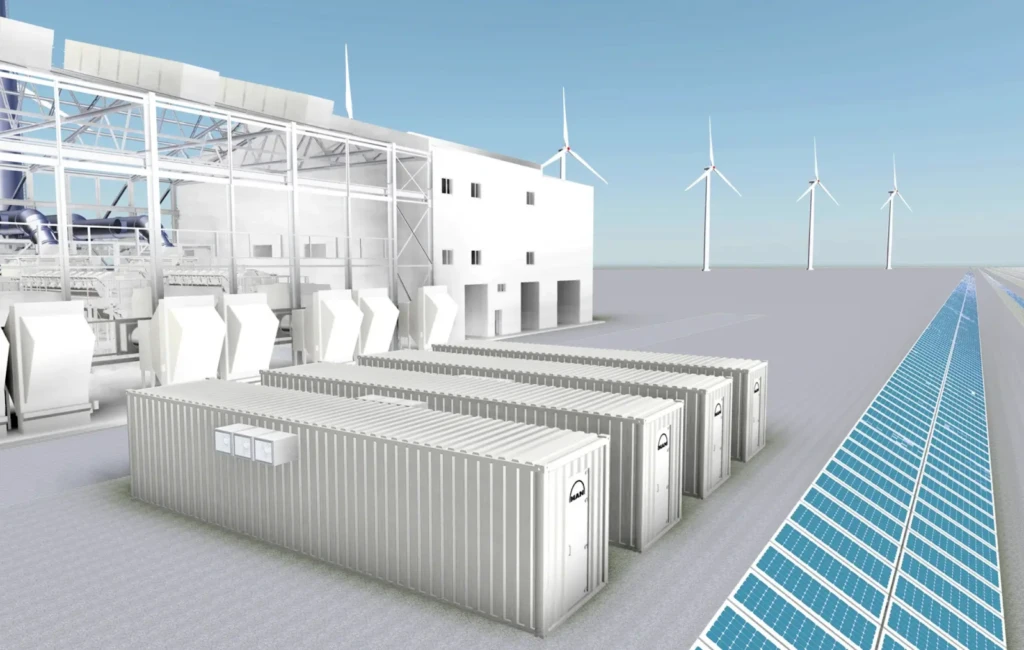
This stored energy plays a crucial role during power outages or nighttime hours, ensuring uninterrupted electricity supply. Since solar panels primarily produce energy during the day, the ability to store surplus electricity makes hybrid systems particularly valuable. This multifunctional hybrid solar system is beneficial in various environments, including residential, industrial, agricultural, and commercial sectors.
How a Hybrid Solar System Works
The main components of a hybrid solar system are
- Solar panels
- Hybrid inverter
- Batteries
- Auxiliary equipment (cables / bidirectional meter)
Solar Panels
Hybrid solar panels consist of semiconductor cells mounted on a durable base and protected by a transparent glass layer. These panels convert sunlight into direct current electricity, which is then transferred through conductive layers.
Most panels are framed with aluminum for protection, although frameless designs are also available for a more modern and aesthetic appearance. For large-scale installations, solar panels can be arranged in different configurations, including:
- Series
- Parallel
- Mixed
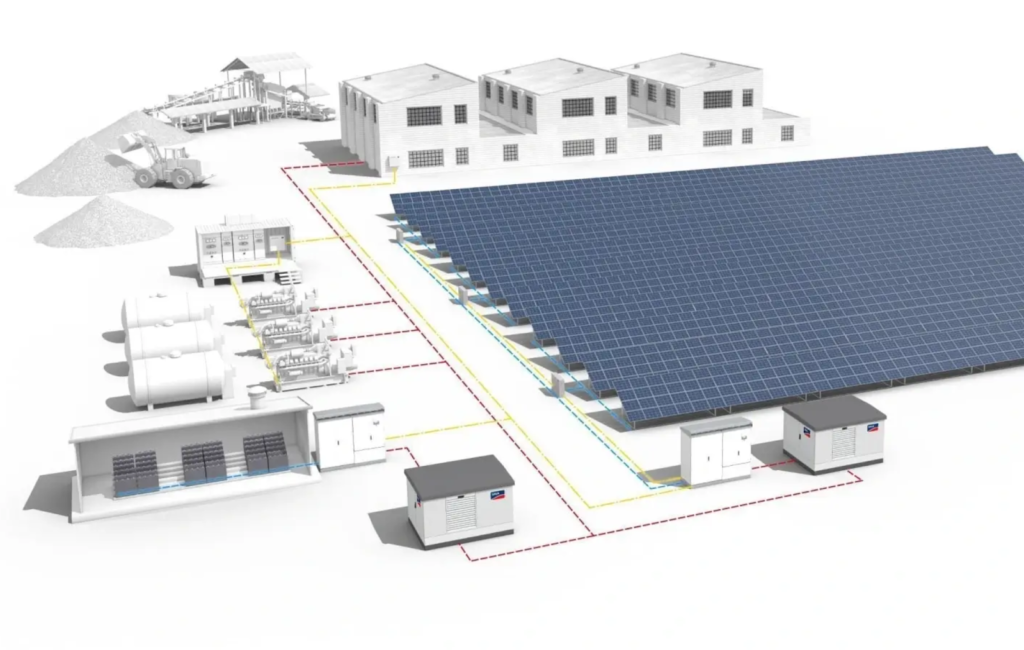
Hybrid Inverter
The hybrid inverter is one of the most essential components of any solar system. Since solar panels generate direct current (DC) while electrical networks operate on alternating current (AC), the inverter is responsible for converting the generated electricity into a usable form. Besides conversion, hybrid inverters manage the flow of electricity between the solar panels, batteries, and the grid. Regardless of whether your system is on-grid, off-grid, or hybrid, selecting the right inverter requires a deep dive into these key technical parameters:
- System capacity
- Input voltage
- Consumption without overload
- Maximum and minimum power
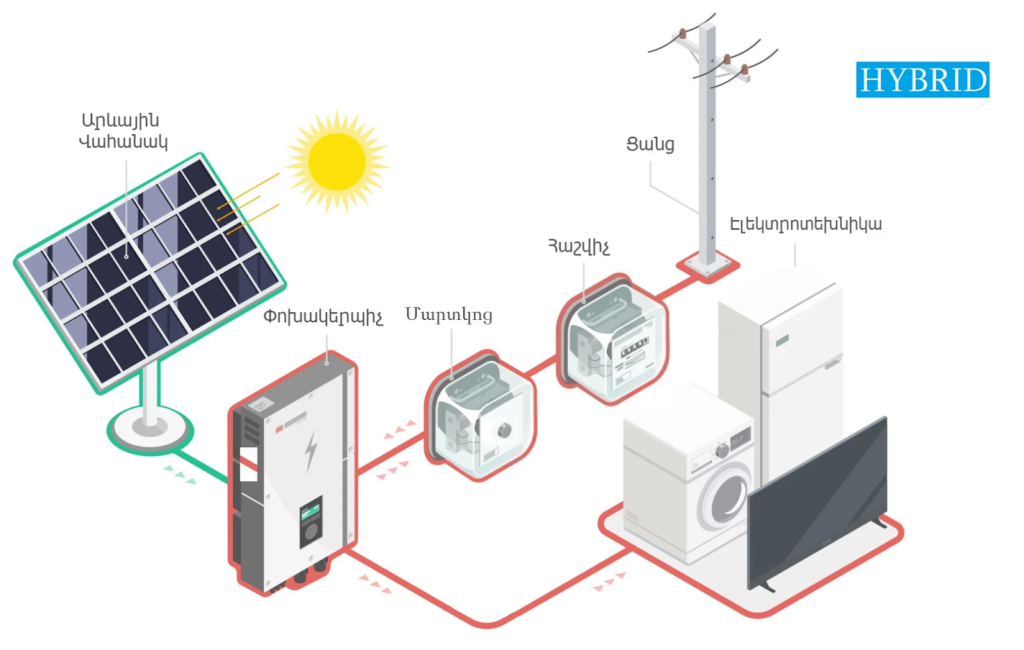
Rechargeable Batteries
Any solar station designed for 24/7 operation includes rechargeable batteries. Rechargeable batteries enable the storage of excess electricity generated during sunny periods for later use when production is insufficient. During the day, surplus energy is directed to the batteries, while at night or during outages, the stored energy is used to power the property. In systems without batteries, excess electricity is exported to the grid, with the expectation of retrieving it when needed.
Auxiliary Equipment
To ensure the proper operation of the hybrid solar system, the following supporting components are required:
- AC/DC protection systems
- Connectors
- AC/DC cables
- Mounting structures
Solar System Calculation
SOLARON has developed a solar energy calculator that shows your potential savings. To use it, simply click the yellow ‘Calculator’ button or follow this link. This virtual tool helps users gain a preliminary understanding of their energy needs and save time.
The calculator allows users to input the following information:
- Location
- Electricity tariff
- Approximate monthly electricity cost (AMD)
- Roof orientation
These four parameters provide a general estimate of the required solar system capacity. Customers can also contact our specialists and benefit from a free consultation by calling 010 44 00 55 or 8757. While the calculator is useful, consulting specialists ensures more accurate and tailored results.
How to Achieve Energy Independence
Depending on electricity consumption and storage needs, there are several ways to achieve energy independence:
- Install a hybrid solar system
- Upgrade an existing system with a hybrid inverter and batteries
- Use a portable power station such as Singo 1000 or Singo 2000